When you think of traveling to Uganda, your mind probably jumps straight to mountain gorillas, the roaring Nile River, and vast savannas. But there is another side to the “Pearl of Africa” that deserves just as much spotlight: its food.
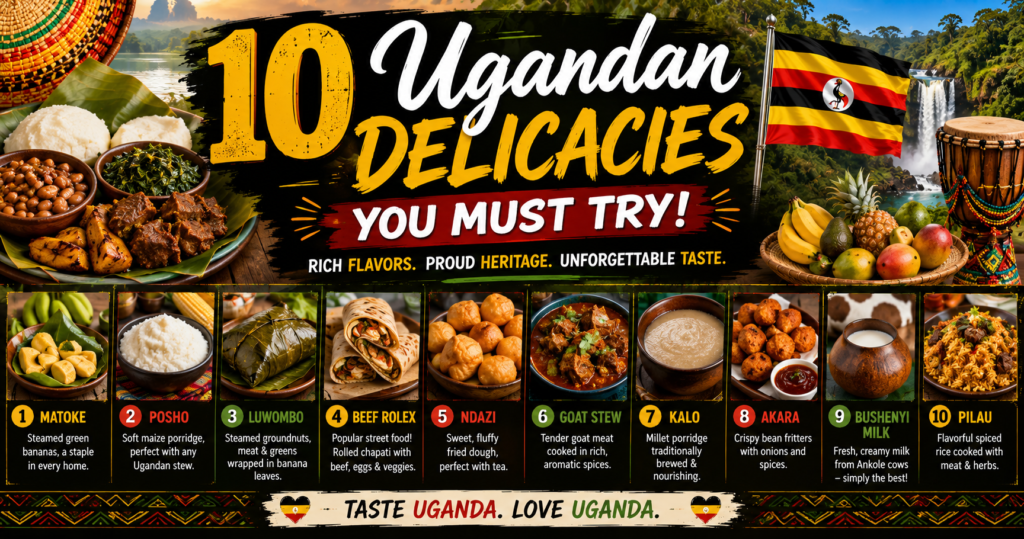
1. What is the National Dish of Uganda? (Matooke)
If Uganda had a culinary king, it would be Matooke (often spelled Matoke). These are green, starchy bananas indigenous to East Africa. Unlike the sweet yellow bananas you eat raw, matooke must be cooked. The traditional way to prepare it is a labor of love: the green bananas are peeled, wrapped tightly in green banana leaves, and steamed over an open wood fire until soft and yellow. Once steamed, they are mashed into a smooth, dough-like consistency. Matooke has a subtle, earthy, and slightly tangy flavor. Locals usually smother it in a rich groundnut (peanut) sauce or beef stew. It is comforting, filling, and served at almost every ceremonial gathering.2. Why is a Ugandan “Rolex” Not a Luxury Watch?
Walk down any street corner in Kampala, Uganda’s bustling capital, and you will hear the sizzle of hot iron plates. This is the birthplace of the Rolex, Uganda’s most famous street food. No, it is not a luxury timepiece! The name is a playful twist on “rolled eggs.” A Rolex starts with a fresh, flaky chapati (a type of flatbread). The cook whips up a quick omelet with eggs, shredded cabbage, sliced tomatoes, onions, and a pinch of salt. Once the omelet is cooked on the griddle, it is placed on top of the chapati, rolled tightly together, and served hot in a piece of paper. It is cheap, incredibly delicious, and the perfect grab-and-go meal at any hour of the day or night.3. How Does Oluwombo Bring Royalty to Your Plate?
Once reserved exclusively for the kings (Kabakas) of the Buganda Kingdom in the early 20th century, Oluwombo (or Luwombo) is now a treasured dish for special occasions like weddings and family reunions. To make this masterpiece, chicken, beef, goat, or smoked fish is seasoned and placed inside a fresh banana leaf that has been gently warmed over charcoal to make it flexible. A rich, creamy peanut sauce and fresh vegetables are added to the meat. The leaf is tied up like a pouch and slowly steamed for hours. When you untie the leaf at the table, a burst of rich, smoky aroma fills the air. The meat becomes so tender it practically melts off the bone.4. What is Katogo and Why is it the Ultimate Ugandan Breakfast?
If you wake up hungry in Uganda, forget the cereal. You need Katogo. The word literally translates to “mixture,” and it is the ultimate morning comfort food. Katogo is a one-pot meal that traditionally combines peeled green bananas (matooke) with a rich gravy. Depending on the cook, the gravy might contain beef offal (known locally as byenda), beans, fresh beef, or groundnut sauce. The ingredients are simmered together until everything is soft, savory, and thick. It is a heavy breakfast designed to give farmers and workers enough energy to last the entire day, but it has become a beloved morning ritual for people from all walks of life.5. Have You Ever Tried Edible Grasshoppers (Nsenene)?
For the adventurous foodie, Nsenene is an absolute must-try. These are long-horned grasshoppers that swarm Uganda during the rainy seasons, particularly in November and April. Harvesting them is a massive community event, and selling them is a great source of income for many families. To prepare them, the wings and legs are plucked off, and the grasshoppers are fried in their own natural oils—no extra oil is needed! Seasoned with just a bit of salt, onions, and chili, they taste surprisingly like crispy, salty, roasted peanuts or chicken skin. They are highly nutritious, incredibly crunchy, and pair perfectly with a cold local beer.6. Why is Groundnut (G-Nut) Sauce the Heart of Ugandan Stews?
In Uganda, peanuts are called groundnuts, or simply “G-nuts.” Unlike Western peanut butter, G-nut sauce (or Ebinyebwa) is a savory, purple-tinted, creamy sauce made from raw ground peanuts that are roasted and ground into a fine flour. The flour is simmered with water, onions, tomatoes, and salt until it thickens into a rich, velvety gravy. It is incredibly versatile; you will find it cooked with dried mushrooms, smoked fish, or simply served plain alongside steamed matooke, sweet potatoes, or millet bread (Kalo). It adds a luxurious, nutty depth to any meal.7. How Do You Eat Muchomo on a Ugandan Road Trip?
If you take a road trip through Uganda, you will inevitably pass roadside markets where vendors run up to your car window holding skewers of smoking, grilled meat. This is Muchomo (derived from the Swahili word for “roasted”). Muchomo refers to roasted meats—typically goat, beef, pork, or chicken—slowly grilled over open charcoal flames. Goat meat is the local favorite because of its rich, gamey flavor. The meat is simply marinated, salted, and roasted until it has a perfect, smoky char on the outside while remaining juicy on the inside. It is usually served with a side of roasted sweet bananas (Gonja) or cassava.8. What is Kikomando and Why Do Locals Love It?
For travelers on a budget, Kikomando is a lifesaver. This simple street food got its name from the legendary action movie character, Commando, because eating it makes you feel tough and full enough to survive any battle! Kikomando is made by slicing a plain chapati into bite-sized strips and mixing it with a generous portion of hot, savory, fried yellow beans. Some vendors will add shredded cabbage or a splash of meat gravy on top. It is incredibly cheap, packed with plant-based protein, and loved by university students and working-class locals alike.9. What is Malewa and Where Does it Come From?
Hailing from the lush, volcanic slopes of Mount Elgon in Eastern Uganda, Malewa is a unique traditional dish made from smoked bamboo shoots. The young bamboo shoots are harvested from the wild forest, dried over smoke to preserve them, and then boiled to soften them. The hard outer joints are cut away, leaving the tender inner shoots, which are then cooked in a creamy groundnut sauce. Malewa has a very distinct, earthy, and woody flavor with a wonderful smoky aroma. It is a beautiful representation of how Ugandan communities live in harmony with their natural surroundings.10. What is Eshabwe and Why is it a Western Ugandan Treasure?
If you travel to Western Uganda, home of the Ankole people and their famous long-horned cattle, you will be offered Eshabwe. Eshabwe is a traditional, creamy condiment made from fermented ghee (clarified butter), rock salt, and water. It is whipped by hand until it turns a pure, smooth white color, looking very much like mayonnaise. It has a tangy, rich, and slightly salty taste. Uniquely, Eshabwe is served cold, usually alongside hot millet bread (Kalo) or steamed matooke. It is considered a food of high respect, often served to honored guests and during traditional ceremonies.Frequently Asked Questions About Ugandan Food
Is Ugandan food spicy?
Unlike Indian or West African food, traditional Ugandan food is not heavily spiced or fiery hot. It relies on natural, fresh flavors, using mild seasonings like onions, tomatoes, salt, and occasionally curry powder. However, if you love heat, you can always ask for Akabanga—a highly potent local chili oil made from yellow habanero peppers. Just a single drop is enough to light up your plate!What is the etiquette for eating traditional meals in Uganda?
In most traditional Ugandan homes, meals are enjoyed sitting on woven floor mats. Hands are always washed before and after the meal because many traditional dishes, like posho, kalo, and matooke, are eaten with your hands. It is considered polite to accept food when offered, and thanking the host or cook after the meal is a highly respected custom.Ready to Taste the Flavors of Uganda?
Before you can pull up a chair and tuck into a warm plate of Oluwombo or grab a fresh street-side Rolex, you will need to get your travel documents sorted. To enter Uganda, most international travelers require a valid Uganda e-visa before arrival. Navigating government portals can sometimes feel overwhelming, but we are here to make your travel planning completely stress-free.Why Choose Us for Your Uganda e-Visa?
- Reliable Travel Visa Services Our global approach has assisted numerous travelers in obtaining their Visa. We take the guesswork out of the application so you can focus on planning your food itinerary.
- Round-the-Clock Assistance Got questions in the middle of the night? Reach out to us 24/7, and our experts will respond within 72 hours with the precise answers you need.
- Experienced Visa Consultants Receive expert guidance to ensure the acceptance of your application. We review your documents thoroughly to avoid common mistakes that lead to delays or rejections.
- Efficient Visa Application Process Apply for your Ugandan visa in minutes with our simplified form. No complicated jargon—just a quick, user-friendly process.