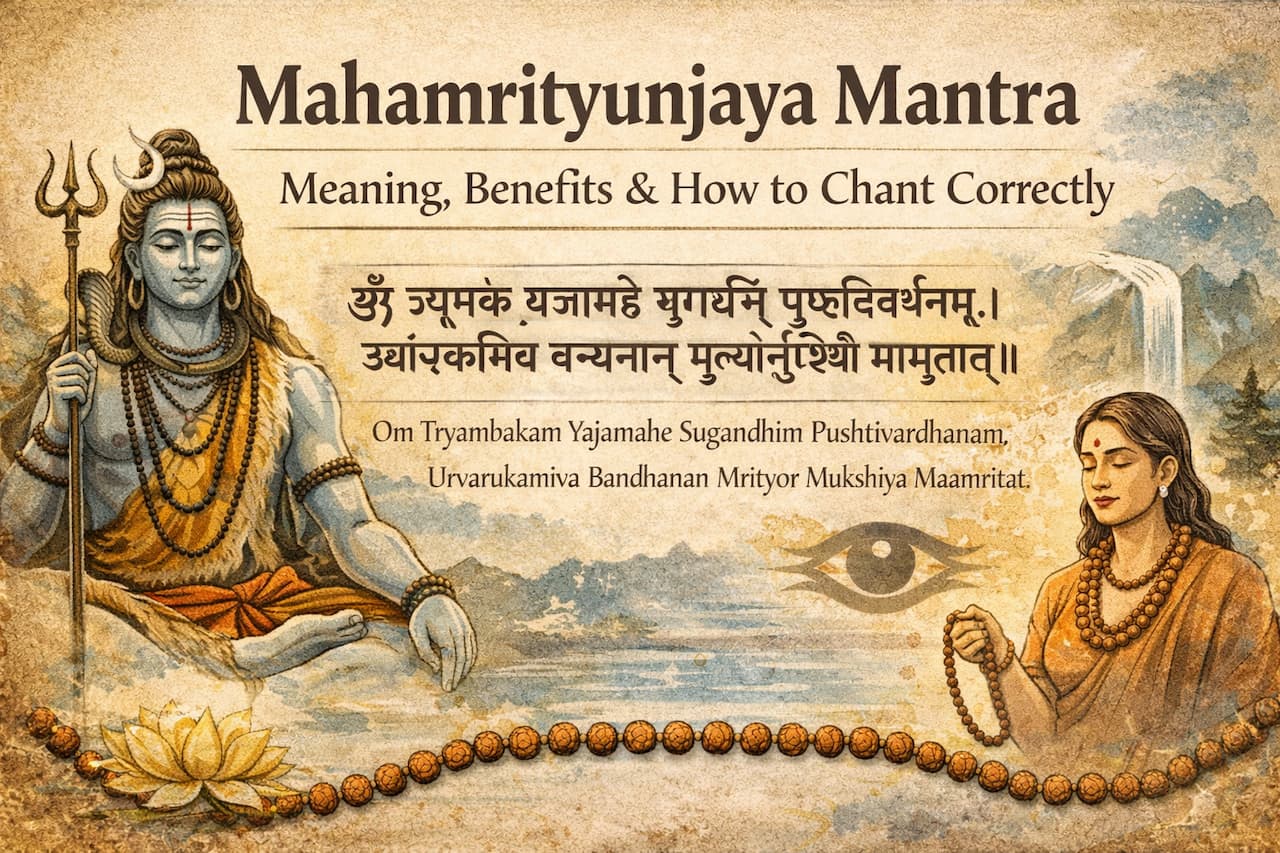
 Mahamrityunjay Mantra is one of the most powerful and sacred mantras dedicated to Lord Shiva. Revered by millions of devotees across the world, this ancient Vedic mantra is known for its spiritual significance, calming vibrations, and ability to inspire courage during challenging times. Whether you are new to Hindu spirituality or looking to deepen your understanding of sacred mantras, learning about the Mahamrityunjay Mantra can be a valuable step on your spiritual journey.
For centuries, people have chanted the Mahamrityunjay Mantra to seek peace, protection, emotional strength, and spiritual growth. Often referred to as the “Great Death-Conquering Mantra,” it is associated with overcoming fear, negativity, and life’s obstacles. Beyond its religious importance, the mantra is also appreciated for its ability to promote mindfulness, inner calm, and positivity.
This comprehensive guide covers everything you need to know about the Mahamrityunjay Mantra, including its meaning, history, significance, benefits, chanting methods, and practical tips for daily practice.
What Is the Mahamrityunjay Mantra?
The Mahamrityunjay Mantra is an ancient Vedic prayer dedicated to Lord Shiva. It is found in the Rig Veda, one of the oldest and most respected scriptures in Hindu tradition.
The mantra is:
Om Tryambakam Yajamahe Sugandhim Pushtivardhanam
Urvarukamiva Bandhanan Mrityor Mukshiya Maamritat
This sacred chant invokes Lord Shiva’s blessings for protection, healing, inner strength, and spiritual awakening.
The Mahamrityunjay Mantra is considered one of the most powerful mantras because it addresses both worldly concerns and deeper spiritual growth.
Why Is It Called Mahamrityunjay Mantra?
The name “Mahamrityunjay” is derived from three Sanskrit words:
- Maha – Great
- Mrityu – Death
- Jaya – Victory
Together, the term means “Great Victory Over Death.”
However, the mantra’s meaning extends beyond physical death. It symbolizes overcoming fear, suffering, ignorance, attachment, and the limitations that prevent personal growth.
In a spiritual sense, the Mahamrityunjay Mantra encourages individuals to rise above negativity and embrace a more meaningful and enlightened life.
The Meaning of Mahamrityunjay Mantra
Understanding the meaning of the Mahamrityunjay Mantra helps deepen its impact.
A simple interpretation is:
“We worship Lord Shiva, the three-eyed one, who nourishes and sustains all beings. May He free us from fear, suffering, and limitations, just as a ripe fruit naturally separates from its stem, and guide us toward peace and spiritual fulfillment.”
This prayer reflects themes of:
- Healing
- Protection
- Courage
- Spiritual growth
- Inner peace
- Freedom from fear
Its message remains relevant regardless of age, background, or spiritual experience.
The Origin of Mahamrityunjay Mantra
The Mahamrityunjay Mantra originates from the Rig Veda and is considered one of the oldest known mantras in Hindu spirituality.
Ancient sages preserved this sacred chant through oral tradition for generations before it was written down.
The mantra has been used for:
- Meditation
- Prayer
- Religious ceremonies
- Spiritual healing
- Seeking divine protection
Its enduring popularity reflects its profound spiritual value and universal appeal.
The Story of Sage Markandeya
One of the most famous stories associated with the Mahamrityunjay Mantra is the legend of Sage Markandeya.
According to Hindu tradition, Markandeya was destined to die at a young age. Despite this prediction, he remained deeply devoted to Lord Shiva and regularly chanted the Mahamrityunjay Mantra.
When the appointed time arrived, Lord Shiva appeared and protected him from Yama, the god of death.
As a result, Markandeya was blessed with a long life and became a symbol of faith, devotion, and spiritual strength.
This story demonstrates the transformative power of devotion and trust in divine guidance.
Why Is the Mahamrityunjay Mantra So Powerful?
Many factors contribute to the spiritual significance of the Mahamrityunjay Mantra.
Connection with Lord Shiva
Lord Shiva represents transformation, wisdom, and liberation.
Chanting the Mahamrityunjay Mantra helps devotees strengthen their connection with these divine qualities.
Sacred Sound Vibrations
The rhythmic sounds of the mantra create positive vibrations that can calm the mind and encourage emotional balance.
Spiritual Focus
The mantra directs attention away from distractions and toward self-awareness and spiritual growth.
Timeless Wisdom
Its message of courage, faith, and inner freedom remains relevant across generations.
Benefits of Chanting Mahamrityunjay Mantra
Mental Benefits
Regular chanting may help:
- Reduce stress
- Improve concentration
- Encourage mindfulness
- Promote emotional balance
- Support mental clarity
Emotional Benefits
The mantra can help:
- Reduce fear and anxiety
- Build confidence
- Strengthen resilience
- Encourage optimism
- Improve emotional stability
Spiritual Benefits
Many practitioners experience:
- Greater self-awareness
- Deeper meditation
- Stronger devotion
- Enhanced spiritual growth
- Increased inner peace
Lifestyle Benefits
Regular practice often encourages:
- Better daily discipline
- Positive habits
- Improved focus
- Greater patience
- A more balanced outlook on life
How to Chant Mahamrityunjay Mantra Correctly
Choose a Peaceful Place
Find a clean and quiet environment where you can focus without interruptions.
Sit Comfortably
Maintain a relaxed posture with a straight spine.
You may sit:
- On the floor
- On a meditation cushion
- On a chair
Calm Your Mind
Take a few deep breaths before beginning.
Allow your attention to settle on the present moment.
Chant Slowly
Recite the Mahamrityunjay Mantra clearly and mindfully.
Avoid rushing through the words.
Focus on Meaning
Reflect on the message of healing, protection, and spiritual growth while chanting.
Remain Consistent
Daily practice often provides the greatest long-term benefits.
Best Time to Chant Mahamrityunjay Mantra
Although the mantra can be recited at any time, certain periods are traditionally considered more favorable.
Early Morning
The time before sunrise, known as Brahma Muhurta, is ideal for spiritual activities because the environment is calm and peaceful.
Monday
Monday is dedicated to Lord Shiva and is considered especially auspicious for chanting the Mahamrityunjay Mantra.
During Meditation
Combining the mantra with meditation enhances focus and awareness.
During Challenging Times
Many devotees chant the mantra when facing stress, uncertainty, or emotional difficulties.
How Many Times Should You Chant?
There is no strict rule regarding the number of repetitions.
Beginners often start with:
- 11 repetitions
- 21 repetitions
More experienced practitioners may chant:
- 51 repetitions
- 108 repetitions
The quality of practice is more important than the quantity.
Consistency and sincerity are key.
What Is a Rudraksha Mala?
A Rudraksha mala is a string of sacred beads traditionally associated with Lord Shiva.
Many devotees use a mala containing 108 beads to count repetitions of the Mahamrityunjay Mantra.
Benefits of using a mala include:
- Improved focus
- Better counting
- Enhanced meditation
- Greater discipline
While helpful, a mala is optional and not required for chanting.
Common Mistakes to Avoid
Chanting Without Attention
Mindful chanting creates a deeper spiritual experience than mechanical repetition.
Being Inconsistent
Daily practice helps strengthen the benefits of the mantra over time.
Focusing Only on Outcomes
The Mahamrityunjay Mantra is a journey of personal and spiritual growth, not merely a method for achieving specific goals.
Ignoring Pronunciation
While perfection is not necessary, making an effort to pronounce the mantra correctly enhances the experience.
Practicing with a Distracted Mind
Try to stay present and engaged throughout your chanting session.
Incorporating Mahamrityunjay Mantra into Daily Life
One reason the Mahamrityunjay Mantra remains popular is its simplicity.
You can include it in your routine by:
- Chanting after waking up
- Practicing before meditation
- Listening during relaxation
- Reciting before bedtime
- Including it in daily prayers
Even a few minutes of practice each day can create meaningful positive changes.
Why Millions Continue to Chant Mahamrityunjay Mantra
The Mahamrityunjay Mantra has endured for thousands of years because it addresses universal human experiences.
Everyone faces:
- Fear
- Uncertainty
- Stress
- Change
- Emotional challenges
The mantra provides a framework for responding to these experiences with courage, faith, and wisdom.
Its timeless message continues to inspire people seeking peace, healing, and spiritual growth.
Frequently Asked Questions About Mahamrityunjay Mantra
Can beginners chant the Mahamrityunjay Mantra?
Yes. Anyone can chant the Mahamrityunjay Mantra regardless of age or spiritual experience.
Is it necessary to know Sanskrit?
No. Understanding the meaning is helpful, but sincere practice is more important than perfect language skills.
Can the mantra be chanted daily?
Yes. Many devotees include the Mahamrityunjay Mantra in their daily spiritual routine.
Can I listen instead of chanting?
Listening can be beneficial, especially for learning pronunciation and creating a peaceful atmosphere. However, active chanting often provides a deeper personal experience.
How long does it take to experience benefits?
Experiences vary from person to person. Consistent practice generally leads to greater awareness, emotional balance, and spiritual growth over time.
Conclusion
The Mahamrityunjay Mantra is much more than an ancient Vedic prayer. It is a timeless spiritual practice that promotes courage, healing, positivity, and inner peace. Through its profound meaning and sacred vibrations, it helps individuals overcome fear, develop resilience, and strengthen their connection with Lord Shiva.
Whether you are beginning your spiritual journey or looking to deepen an existing practice, the Mahamrityunjay Mantra offers valuable guidance and support. By incorporating this powerful mantra into your daily routine, you can cultivate greater mindfulness, emotional balance, and spiritual awareness while embracing life’s challenges with confidence and faith.
For anyone seeking a simple yet transformative spiritual practice, the Mahamrityunjay Mantra remains one of the most meaningful and accessible paths to inner growth and well-being.