Tokyo is a sensory overload in the best way possible—a neon-lit playground of technology and sushi. But if you think Tokyo is Japan, you are missing out on the soul of the country. From the silent bamboo forests of Kyoto to the steaming volcanic waters of Hakone, the “real” Japan often lies just a bullet train ride away.
What are the best cities to visit in Japan besides Tokyo?
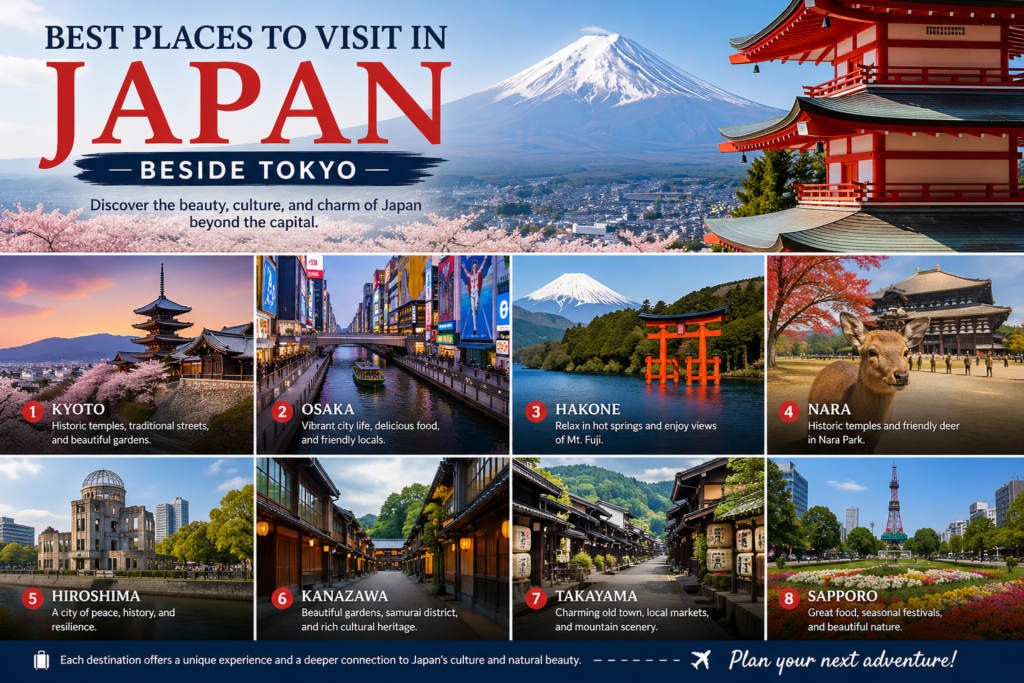
If you are looking for the perfect balance of culture, food, and modern life, your first stops should be Kyoto and Osaka. Kyoto is the cultural heart of the nation, home to thousands of temples and traditional tea houses. On the flip side, Osaka is Japan’s “kitchen,” where the vibe is louder, the people are friendlier, and the street food is second to none. For history enthusiasts, Hiroshima offers a moving look into the past combined with the stunning beauty of nearby Miyajima Island. If you prefer cooler climates and wide-open spaces, Sapporo in the north is famous for its beer, snow festivals, and incredible seafood.Why is Kyoto considered the cultural capital of Japan?
Kyoto was the capital for over a thousand years, and it feels like it. Unlike Tokyo, which was heavily rebuilt, Kyoto’s history is preserved in its 17 UNESCO World Heritage sites. Walking through the Gion District, you might catch a glimpse of a Geiko (Geisha) scurrying to an appointment. The Fushimi Inari Shrine, with its thousands of orange torii gates, offers a spiritual hike like no other. Kyoto isn’t just a place you see; it’s a place you feel.Is Osaka really the best city for food lovers?
Ask any local where to eat, and they will point you to Osaka. The city’s motto is “Kuidaore,” which basically means “eat until you drop.” The Dotonbori district is a neon-soaked street food paradise. You must try Takoyaki (octopus balls) and Okonomiyaki (savory pancakes). Beyond the food, Osaka is home to Universal Studios Japan and one of the world’s largest aquariums, making it a fantastic spot for families.Where can I find the best views of Mount Fuji?
While you can sometimes see Fuji from Tokyo skyscrapers, nothing beats seeing it up close from Hakone or Kawaguchiko. Hakone is a popular hot spring resort town just a short trip from Tokyo. You can ride a cable car over sulfuric vents, cruise across Lake Ashi on a pirate ship, and—weather permitting—get that postcard-perfect shot of Mount Fuji reflecting in the water.Is Nara worth a day trip from Kyoto?
Absolutely. Nara is famous for its Bowing Deer. In Nara Park, hundreds of friendly (and sometimes hungry) Sika deer roam free. They are considered messengers of the gods and will actually bow to you if you offer them a deer cracker. Nara is also home to Todai-ji Temple, which houses one of Japan’s largest bronze Buddha statues. It’s a peaceful, walkable city that provides a nice break from the faster pace of the bigger hubs.Which Japanese cities offer the best traditional experience?
If you want to step back into the Edo period, head to Kanazawa or Takayama.- Kanazawa: Known as “Little Kyoto,” it features one of Japan’s most beautiful landscape gardens, Kenroku-en, and a beautifully preserved samurai district.
- Takayama: Nestled in the Japanese Alps, this town is famous for its timber-framed houses and the morning markets where you can buy local crafts and Hida beef skewers.
What makes Hiroshima and Miyajima Island so special?
Hiroshima is a city of resilience. The Peace Memorial Park is a sobering but necessary visit. However, the city has transformed into a vibrant, green metropolis. A short ferry ride takes you to Miyajima Island, where the “floating” Torii gate stands in the sea. It is widely considered one of the three most scenic views in Japan.How do I get around Japan without a car?
Japan has arguably the best public transport system in the world. The Shinkansen (Bullet Train) connects almost all major cities at speeds of up to 320 km/h. Within cities, the subways are punctual, clean, and easy to navigate with English signage. For travelers visiting multiple regions, a Japan Rail Pass or regional passes are highly recommended.What should I know about the Japan e-Visa before traveling?
Before you pack your bags, ensure your entry documents are in order. Japan has simplified its entry process for many nationalities through the e-Visa system. If you find yourself in a rush or need to travel urgently, it is vital to use a service that understands the nuances of the application. For those needing expedited help, the Emergency Japan e-Visa resource can be a lifesaver to ensure you don’t miss your flight. Obtaining a Japan Visa for tourists has never been easier thanks to these digital advancements.Why Choose Us for Your Japan Travel Needs?
Planning a trip to Japan should be about choosing which ramen shop to visit, not stressing over paperwork. Here is why travelers trust our Reliable Travel Visa Services:- Global Approach: Our experienced visa consultants have assisted numerous travelers in obtaining their documents with a high success rate.
- Round-the-Clock Assistance: Travel doesn’t sleep. Reach out to us 24/7, and our experts will respond within 72 hours to solve your queries regarding the Japan e-Visa application.
- Expert Guidance: Receive professional advice to ensure your application meets all government standards, reducing the risk of rejection.
- Efficient Process: Apply for your Emergency Japan e-Visa in minutes with our simplified, user-friendly form designed for busy travelers.