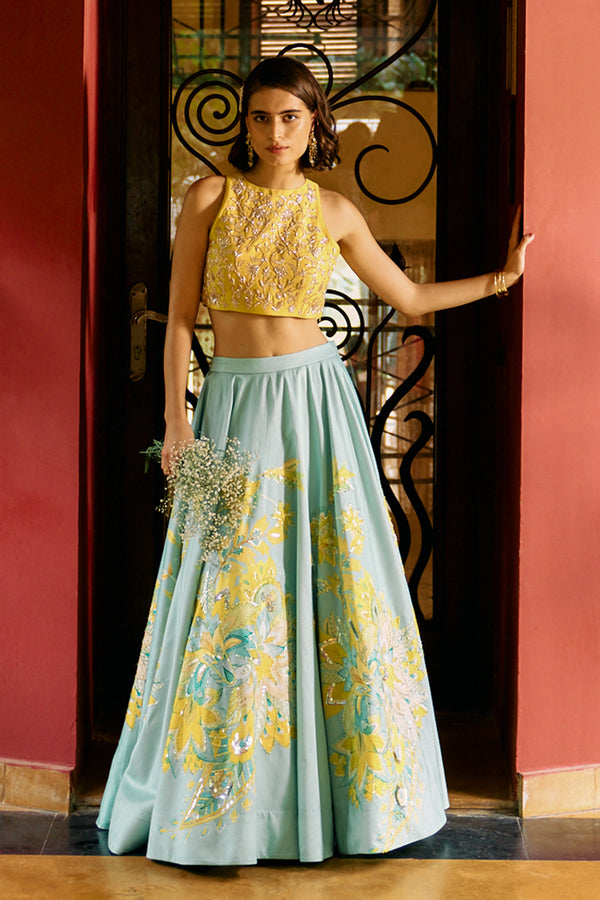
An Indian wedding is rarely a single event. Over several days, across multiple ceremonies — from the intimate mehendi to the grand reception — the occasion changes, and so should your lehenga. Each function calls for a different energy, a different palette, and a different silhouette.
Here is a complete guide to matching your lehenga style to every wedding occasion.
The Bridal Lehenga: The Main Event
The bridal lehenga is the most significant garment you will ever wear — and it deserves the most careful consideration. Traditional bridal lehengas in India are typically in shades of red, maroon, and deep pink, though contemporary brides are increasingly choosing pastels, blush, ivory, and even deep jewel tones.
Silhouette: A-line or heavily flared. Volume is appropriate; this is the occasion for drama.
Fabric: Silk, velvet, or tissue silk for grandeur. Organza for a modern, lighter look.
Embellishment: Heavy zardozi, gota patti, or resham embroidery covering most of the fabric. The more handwork, the higher the craftsmanship and value.
The Sangeet Lehenga: Colour and Joy
The sangeet is the most celebratory pre-wedding event, and your lehenga should reflect that energy. This is the occasion to experiment with bold colours, prints, and playful silhouettes.
- Silhouette: Flared, layered, or ruffled — anything that moves beautifully on the dance floor.
- Fabric: Georgette, crepe, or net for ease of movement.
- Colour: Bright yellows, electric blues, vibrant pinks, or contemporary coral.
The Mehendi Lehenga: Greens and Florals
By tradition, the mehendi ceremony is associated with greens and yellows, though modern brides are expanding this palette. A floral lehenga works beautifully here — the botanical motifs echo the henna tradition and bring a natural, romantic quality to the look.
- Silhouette: A-line or tiered for a relaxed, feminine look.
- Fabric: Cotton silk, chanderi, or light georgette.
- Embellishment: Minimal — thread embroidery, small mirrors, or printed patterns.
The Reception Lehenga: Contemporary Elegance
The reception calls for a more sophisticated, modern look. Many brides choose to move away from red at this event, opting for golds, silver-toned ivory, or deep jewel tones.
- Silhouette: Mermaid or structured A-line for a sleek, couture effect.
- Fabric: Tissue silk, brocade, or heavy organza.
- Embellishment: Sequin work, cut-glass embroidery, or tone-on-tone resham.
The Bridesmaid Lehenga: Cohesive but Individual
Bridesmaids today are no longer expected to wear identical outfits. The trend has shifted toward coordinated palettes that allow each individual to express her own style within a unified aesthetic. The bridesmaid lehenga collection at Archana Shah Official is designed with exactly this in mind — versatile silhouettes and complementary colour stories that work beautifully together without looking uniform.
The Guest Lehenga: Festive but Appropriate
Wedding guests should aim to complement rather than compete with the bridal party. Choose colours that are festive but not bridal — avoid red, heavy gold, or all-white. Pastels, printed lehengas, and lighter embroidery are ideal.
Quick Reference: Occasion to Style
- Wedding ceremony: Heavy flared or A-line in silk/velvet with full embroidery.
- Sangeet: Bright, flared or ruffled in georgette/crepe.
- Mehendi: Floral or printed, light fabric, minimal embellishment.
- Reception: Mermaid or structured in tissue silk or brocade.
- Bridesmaid: A-line or flared in coordinated palette.
- Guest: Printed or lightly embroidered in festive but non-bridal colours.
Final Thought
Each ceremony in an Indian wedding has its own emotional signature — and your lehenga should honour that. Plan your looks in advance, ensure each is photographed well, and most importantly, make sure you are comfortable enough to enjoy every moment.