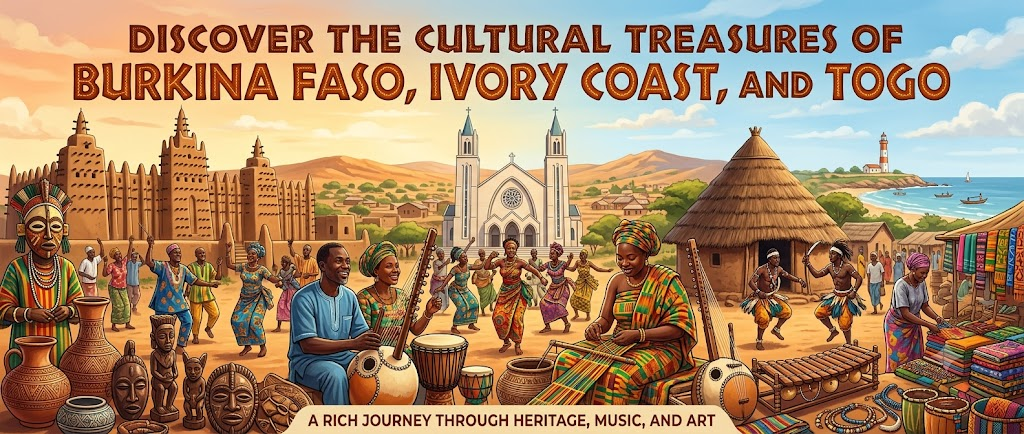
West Africa is one of the most rewarding, soul-stirring, and culturally profound regions on the planet. From golden tropical beaches and misty mountain forests to ancient clay architecture and energetic city streets, it offers an unforgettable adventure for travelers willing to step off the beaten track.
If you are planning a journey to Burkina Faso, Ivory Coast (Côte d’Ivoire), and Togo, this comprehensive guide will help you sort out your itinerary, understand local customs, and secure your travel documentation with ease.
Why should you put West Africa on your travel bucket list?
Many travelers overlook West Africa in favor of more mainstream tourist hubs, but those who make the journey discover a region filled with raw beauty, deep history, and unparalleled hospitality.
These three neighboring nations—Burkina Faso, Ivory Coast, and Togo—pack an incredible variety of environments and cultural expressions into a relatively accessible geographic area. Traveling here is not about checking off static monuments; it is about immersing yourself in living history. You can spend one day exploring the historic French colonial architecture of Grand-Bassam, the next trekking through the lush, cocoa-producing hillsides of Kpalimé, and another appreciating the geometric, mud-brick architecture of Burkina Faso.
If you want a travel experience that feels authentic, vibrant, and deeply human, West Africa is the perfect destination.
What are the top cultural treasures of Burkina Faso?
Burkina Faso is a landlocked nation famous for its deeply rooted artistic pride. The country’s name literally translates to “The Land of Honest People,” and travelers quickly discover that the warmth of the Burkinabè people is its greatest treasure.
Historically, Burkina Faso has been a major hub for African creative expression. It proudly hosts FESPACO (the Pan-African Film and Television Festival of Ouagadougou), the continent’s largest and most prestigious cinema festival, alongside SIAO, a massive international arts and crafts fair.
Outside the capital, the cultural heart of the country beats in Bobo-Dioulasso. Here, the historic district of Dioulassoba is famous for its stunning Grand Mosque. Built in the late 19th century out of mud-brick, clay, and timber spikes, it stands as a breathtaking masterpiece of Sudano-Sahelian architecture. Walking through its cool, dark clay corridors is a humbling step back in time.
Is it safe to travel to Burkina Faso?
Safety is a critical and necessary consideration when planning a trip to Burkina Faso. Because of ongoing regional security issues, travelers must plan with extreme care and constantly monitor local travel advisories.
While rural areas and northern border zones are currently unsafe due to insurgent activity, the major urban and cultural centers of Ouagadougou and Bobo-Dioulasso are heavily secured. If you choose to visit these cities, it is highly recommended to fly between them rather than traveling by road.
Always stick to well-trafficked, central city areas, avoid traveling outside urban zones after dark, and hire local, registered guides who understand the current security dynamics of the region.
How do I get a tourist visa for Burkina Faso?
Unlike regions where you can simply turn up at the border and buy a visa, Burkina Faso requires almost all international travelers to hold a valid, pre-approved visa before arrival.
Thankfully, the country has modernized its immigration systems to make this process much easier. Instead of visiting an embassy in person, mailing your physical passport, or waiting weeks for processing, you can submit your application entirely online.
To secure your entry hassle-free and avoid stressful delays at the airport, you can apply for your Burkina Faso eVisa online. Simply fill out the digital application form, upload your passport scans, pay the fee, and receive your official electronic approval document via email.
What makes Ivory Coast the cultural powerhouse of West Africa?
Ivory Coast (Côte d’Ivoire) is a country of fascinating, high-energy contrasts. Boasting over 60 distinct ethnic groups, its cultural identity is incredibly diverse, celebrated through unique music, dance, and spiritual traditions.
The country seamlessly blends the ultra-modern with the ancient. In the south, you have the pulsing, cosmopolitan lifestyle of Abidjan, where chic cafes and contemporary African art galleries sit alongside traditional street food stalls selling attiéké (grated cassava) and grilled fish.
Further along the coast, the UNESCO World Heritage site of Grand-Bassam offers a completely different rhythm. Here, decaying French colonial buildings are slowly being reclaimed by nature, sitting alongside a vibrant artisan community and sandy beaches where locals gather to listen to reggae and watch the Atlantic waves roll in.
What are the must-visit tourist attractions in Ivory Coast?
If you are drafting an Ivory Coast itinerary, make sure these highlights are on your list:
Abidjan: Often called the “Manhattan of West Africa,” this massive metropolis features a dramatic skyline, the iconic St. Paul’s Cathedral, and bustling local markets like Treichville.
Yamoussoukro: The official political capital is home to the Basilica of Our Lady of Peace. Modeled after St. Peter’s in Rome, this colossal monument is officially recognized as the largest church building in the world.
Man and the Western Highlands: Ideal for hikers and nature lovers, this misty, mountainous region is famous for its cascading waterfalls, dramatic peaks, and sacred vine bridges woven by local elders.
Taï National Park: One of the last remaining primary rainforests in West Africa, this UNESCO site is a sanctuary for wild chimpanzees, pygmy hippos, and incredible biodiversity.
How do I apply for an Ivory Coast tourist visa online?
Ivory Coast operates a highly structured and strictly enforced eVisa system for all non-ECOWAS citizens. You must complete your pre-enrollment before catching your flight.
The process is completed online: you submit your personal details, upload supporting documents (such as your flight booking and hotel confirmation), and pay the processing fee. The government will then issue a pre-approval barcoded letter.
Upon landing at Felix Houphouet-Boigny International Airport in Abidjan, you present this printed letter at the dedicated biometric visa desk. The officers will scan your fingerprints and print the physical visa sticker directly into your passport. To start your registration today, you can use the official Ivory Coast tourist visa.
Why is Togo often called “West Africa in miniature”?
Togo is a narrow, pencil-shaped strip of land sandwiched between Ghana and Benin. Do not let its small geographic size fool you—it packs almost every landscape, climate, and cultural feature found across the entire West African region into its borders.
In the south, the breezy coastal capital of Lomé sits directly on the Atlantic Ocean, offering wide sandy beaches, colonial-era cathedrals, and lively markets. Moving north, the terrain transitions into the cool, cloud-shrouded forests of Kpalimé, the country’s coffee and cocoa hub, which is perfect for spotting butterflies, hiking Mount Agou, and buying hand-carved woodwork.
Deep in the north, the land drys into savanna, leading to the Tamberma Valley (Koutammakou). This UNESCO World Heritage site is famous for its unique, double-story clay fortress houses called tatas, which have served as both family homes and defensive structures for centuries.
What is the famous Akodessewa Fetish Market in Lomé?
For travelers interested in traditional African spiritual systems, the Akodessewa Fetish Market in Lomé is a fascinating, if sometimes intense, cultural experience.
While much of Togo is Christian or Muslim, traditional Voodoo (locally known as Vodoun) remains a deeply respected and active belief system. Akodessewa is the largest Voodoo market in the world. It is not a theatrical tourist attraction; it is essentially an outdoor pharmacy for traditional healers.
The market stalls are lined with organic ingredients, including dried animal skulls, skins, bones, and herbs, which are used to brew remedies and create protective charms. Hiring a local guide to walk you through the market is highly recommended, as they can explain the deep-rooted spiritual beliefs behind the practices and translate conversations with the resident priests.
What are the entry requirements and visa rules for Togo?
If you are planning to cross the border into Togo, you must apply for your visa prior to departure. The Togolese government has fully transitioned to an online eVisa system, and physical visas are no longer issued at land borders or airport desks without pre-registration.
Travelers must submit their passport details, flight itinerary, and proof of accommodation online at least five business days before travel.
To prevent boarding denials or entry delays, ensure you complete your Togo tourist eVisa application well in advance of your travel date.
When is the best time of year to visit West Africa?
The absolute best window to explore Burkina Faso, Ivory Coast, and Togo is during the dry season, which runs from November to February.
During these months, temperatures are slightly more moderate, humidity drops, and unpaved rural roads are easily passable. This period also coincides with the Harmattan—a dry, dusty wind that blows south from the Sahara Desert. While the Harmattan can create a hazy sky (which softens the sunlight beautifully for photography), it helps keep the scorching tropical heat at bay.
The rainy season (typically from May to October) brings heavy, tropical downpours. While the rain turns the landscapes incredibly lush, green, and beautiful, it can also wash out dirt roads in rural areas, making travel slower and more physically demanding.
Do I need a Yellow Fever vaccination certificate for West Africa?
Yes, without exception. A Yellow Fever vaccination certificate is a mandatory entry requirement for Burkina Faso, Ivory Coast, and Togo.
When arriving at any airport or land border, health officials will ask to see your physical “Yellow Card” (the International Certificate of Vaccination or Prophylaxis). Your vaccination must be administered at least 10 days prior to your arrival to be considered valid.
If you do not have a valid, stamped card, you will likely be denied entry or forced to receive an on-the-spot vaccination at the border, which carries health risks and additional fees.
Additionally, it is highly recommended to consult a travel clinic about malaria prophylaxis, as malaria is prevalent throughout the region, and to carry a personal supply of basic over-the-counter medications.
How do I manage money, cash, and cards in West Africa?
All three of these nations—Burkina Faso, Ivory Coast, and Togo—are members of the West African Monetary Union and use the exact same currency: the West African CFA Franc (XOF).
Because they share a currency, you can carry your physical bank notes across borders without constantly paying exchange fees. However, navigating the local economy requires a bit of practical strategy:
Cash is King: Credit and debit cards are rarely accepted outside of luxury hotels, major supermarkets, and high-end restaurants in major cities like Abidjan or Lomé.
ATM Access: You can find ATMs in major cities (look for regional banks like Ecobank, SG, or Orabank), but they can occasionally run out of cash on weekends. Always carry a cash backup.
Break Large Bills: It is notoriously difficult to get change for large banknotes (like 10,000 XOF notes) from taxi drivers or market vendors. Keep a steady supply of 1,000, 2,000, and 5,000 XOF notes handy for your daily purchases.
Why choose us?
Planning a multi-country trip across West African borders involves navigating different immigration systems, document requirements, and payment portals. We are here to make your pre-travel planning stress-free, secure, and straightforward.
Here is why international travelers trust us to handle their travel documentation:
Reliable Travel Visa Services: Our global approach has assisted numerous travelers in successfully obtaining their visas with absolute precision.
Round-the-Clock Assistance: Reach out to us 24/7. Our dedicated team of customer experts is always ready to assist and will respond to your inquiries within 72 hours.
Experienced Visa Consultants: Receive expert, hands-on guidance to ensure your application meets every country’s specific guidelines, minimizing any chance of rejection.
Efficient Visa Application Process: Skip confusing government layouts. Apply for your tourist visas in minutes using our highly simplified, user-friendly digital forms.